The Burn Comes Later
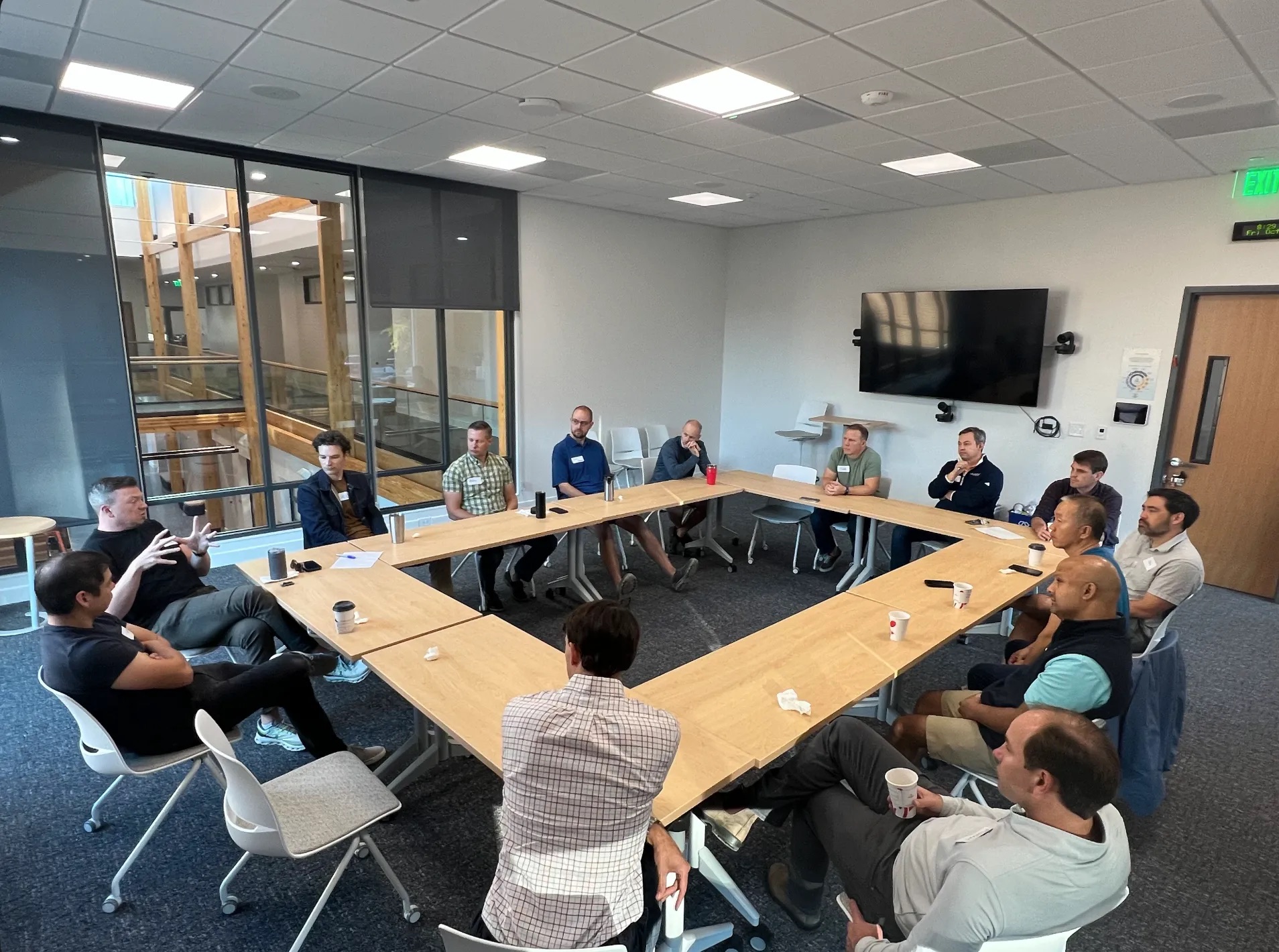
Previous Week In Practice
Last week we talked about reading aloud to our kids, and one dad opened by confessing that he had cheated. The family listened to an audiobook in the car instead, the story of Nate Saint, the missionary pilot. Nobody held it against him. Everyone in the car heard the same story at the same time, and that was most of the point.
Another father’s almost-four-year-old came home from the library with a real chapter book, nearly no pictures at all, and they started it that night. He is attempting the accents. Some of his kids love that, and others groan, and he suspects they will remember it either way. A third dad has been trying to talk his youngest into spending some birthday money on Little Britches, which came up last week. The negotiations are ongoing.
What the School Told Us
The night before we met, several of us were at Trinity’s evening on Technology & the Trinity Student, so we spent the morning comparing notes.
What surprised most of us was how little the school actually uses screens. Once a middle schooler starts bringing an iPad home, it’s easy to assume the whole school day happens on one. The school’s own survey put middle school closer to a quarter of the day, mostly for assignments and feedback. The lower school uses almost none until about third grade, and they still teach cursive and read whole books. One dad said he didn’t learn much new, but he left relieved.
The school explained why it gave every student a device back in 2013: so no family had far more than another, so the devices could be locked down in one way, and because that was where everyone was heading. That last reason, the head of school said, is the one they regret. One dad heard from a school leader that fifteen years ago the parents in a meeting like this were asking for more technology. Now the wind has turned, and the school is turning with it: sixth graders no longer take their iPads home, and middle school has started device-free weekends.
The leaders kept returning to one question: does this use of technology make better what we are already trying to do? If not, they pull it back, partly to protect what one called the “productive cognitive struggle,” the wrestling that makes learning go deep. Several of us thought that was a good test for our homes too.
A Stove Burns Right Away
The comment that stayed with the room came from a question one father asked that night. When a child touches a hot stove, he gets burned and he learns, right then. Technology doesn’t work that way. It feels good, nobody knows, and the burn comes much later. That same morning there had been a story about a young broadcaster who lost a new job over things he had posted when he was fifteen.
The teacher who runs the sixth-grade digital citizenship class made a quieter version of the point. Her students ask when their digital footprint starts. Before they are born, she tells them, the day their parents post the ultrasound. One dad heard that as a word to us before it was a word to the kids. We are writing their record before they can write a word of it.
Paul names this pattern plainly: “Whatever one sows, that will he also reap” (Galatians 6:7). We usually hear that as a warning, and it is one, but the next verses say the same thing about doing good. The harvest comes “in due season” for those who do not give up. Delay cuts both ways. The habits we are planting now, in them and in ourselves, will also come up later.
You Can’t Lock Down a Heart
A dad who works in IT said what several of us were feeling: you can lock down a device as much as you want, and you will never get it to one hundred percent. Another father admitted that much of his worry isn’t about school at all. It’s about home, where he feels like the family IT department.
That is why the digital citizenship class drew so much appreciation. It isn’t just how to use an iPad safely. It’s integrity and character, the things a young person carries into a dorm room where nobody is checking. One dad pointed to hard stories from college campuses in recent weeks and said the common thread looked like a lack of moral formation, kids who simply went along with the crowd.
Then one dad told us about his oldest. They had put monitoring software on his phone, and one evening his parents asked him to bring it down so they could look through it. He handed it over without any fuss. Later his son told him, “I think Dad can see everything on my screen. Don’t tell me if he can’t.” He wanted the accountability. That seemed to say something about kids that we forget: they aren’t only trying to get away with things. Some part of them wants someone to be watching who loves them.
The Time That Is Given Us
What many of us valued most was the school’s humility: real apologies, and some honest “we don’t know” answers. The head of school admitted that the smartest people in the world have no idea how to control what is happening with AI, and then noted that the school’s AI policy would be out in a few weeks anyway. It felt less like a verdict than an invitation to keep working it out together. One father who counsels for a living said he tells parents that he has the training, but they have their child, and the best outcome comes from putting the two together. A school and a family are meant to work the same way.
The evening closed with Gandalf, telling Frodo that we don’t choose the times we live in: “All we have to decide is what to do with the time that is given us.” One dad connected it to the men of Issachar in 1 Chronicles 12:32, who “had understanding of the times, to know what Israel ought to do.” It isn’t a mistake that we’re raising kids now. We can be eaten up by worry about it, or we can take up the work in front of us.
We didn’t settle how much is too much, and we won’t. We are bracing for a burn we can’t see coming, and at the same time we’re trusting that formation, and grace, are slow too.
For This Week
- Try the school’s three suggestions at home. Have your kid open the device, write down the homework, and close it. Keep devices in common rooms and out of bedrooms. When they say they need the laptop, ask what for and for how long.
- Ask whether it makes anything better. Pick one screen habit in your house, including yours, and ask whether it actually improves something you care about. If it doesn’t, pull it back for a week.
- Look at your own posts about your kids. Scroll back through what you’ve shared about them, and ask whether they would be glad to find it at fifteen, or at twenty-five.
- Talk about integrity, not just rules. At dinner, ask your kids what they think the difference is between not getting caught and doing the right thing.
- Let them know you’re watching because you love them. If you monitor a device, say so, and tell your kid why.