We Don't Have Five Minutes
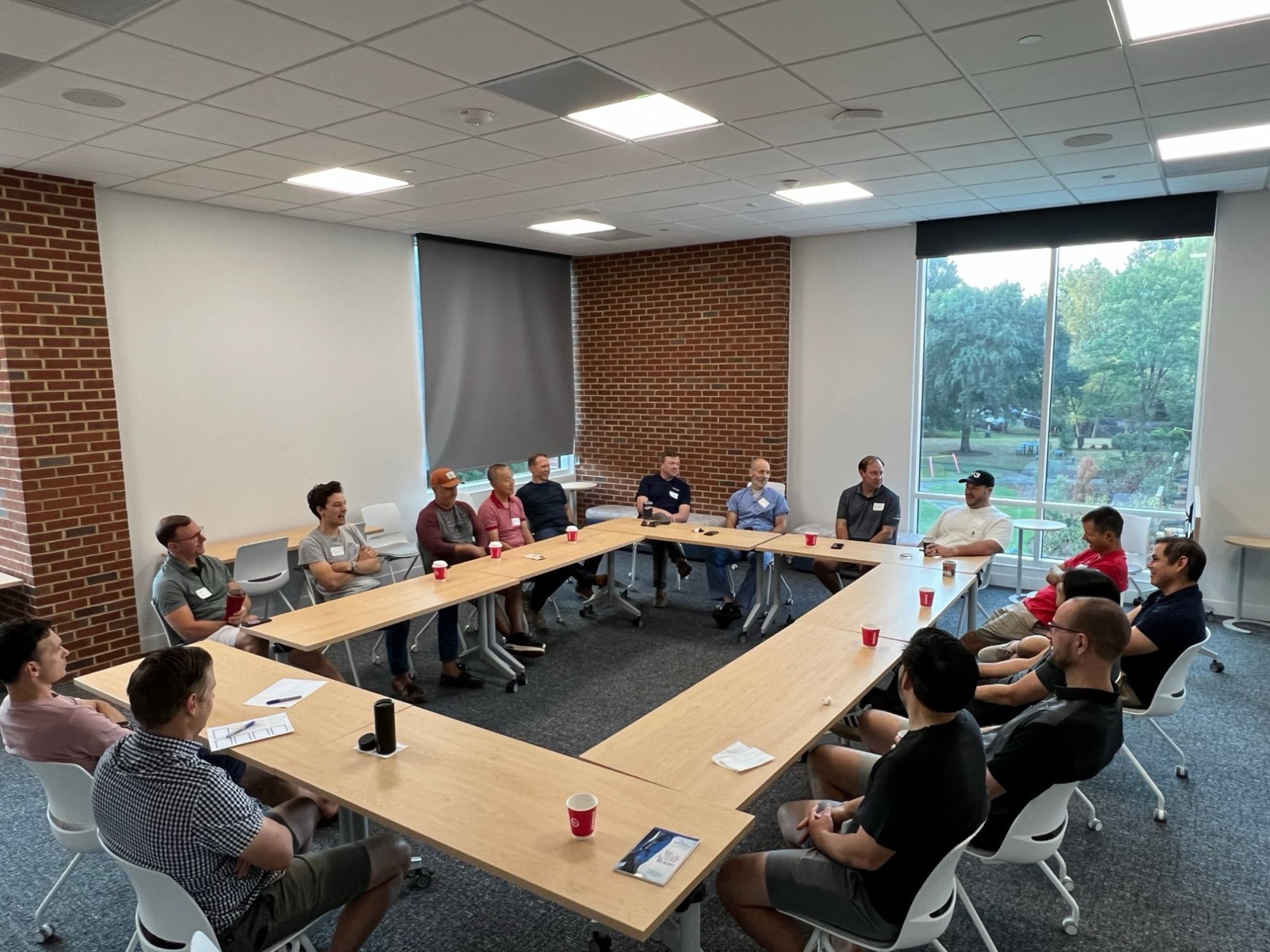
The exercise was five minutes of silence. Sit still, we were told, and think about what you want the end of this school year to look like — for your kids, for your marriage, for yourself. Pray about it, dream about it, or just sit there. Only don’t talk.
It is an awkward thing to ask of a room full of men at a quarter past eight in the morning, and it felt like it. But when the timer finally went off, almost nobody came back with a goal. What came back instead was a remarkably honest accounting of how fast we are all moving.
One dad admitted he had walked in on fumes — three nights running on campus, more practices than he can count — and couldn’t produce an answer at all. What surfaced instead was simply that he wants to hug his kids every day. Another had been sitting with a line from Psalm 124, that our help is in the name of the Lord, the maker of heaven and earth, and said the only thing he could hold in his head for five minutes was his thirteen-year-old daughter’s faith. He wants it stronger than his own, and he knows he cannot produce it. “I can’t beat that into her,” he said. “It’s got to come from her.” Someone suggested, kindly, that he might be setting the bar impossibly high. He agreed, and said he couldn’t get past it anyway.
A third described a house running at a frantic pace because both parents work hard — late nights, early mornings, the sentence I can’t do this with you right now — and asked out loud what that is teaching. Days are long, he said, but years are short. A fourth had raced from work to a cross-country meet to baseball to the lower school parent night, walked in late, and sat down to hear the new head of the lower school talk about being slow and unhurried. “I thought, what the heck, dude. That’s the opposite of my life.” Then, after a beat: “But it shouldn’t be.”
The Thing We Can’t Make More Of
The longest answer came from a dad who thinks about time the way he thinks about a budget. The fight isn’t everything we have to do, he said. It’s how much time we have to do it in. So he asks of his day what he’d ask of a line item: is there anything in here I don’t actually need to be spending on?
He is not undisciplined about it. He barely watches television, gave up sports almost entirely, got rid of his video game console in his twenties. And still, he said, he pours hours into selfish escapes, and he hates it. “Do I want to play one more hand of solitaire on my phone while my kid is trying to tell me something that’s absolutely inconsequential — but I’m never getting that moment back?”
Then he told on himself about that very morning. Watching the clock, short with everybody, pushing, while the rest of the family moved at their own speed. “I yell out, we’ve got five minutes. We don’t have five minutes. There’s no chance. We’ve never once left the house at that time.” The nine minutes he had spent on the snooze button were the same nine minutes that would have made the morning peaceful. “I’m hurrying,” he said, “because I used the thing I can’t make more of, and I used it wrong.”
Another dad thanked him for the ownership in that, and named the question underneath it: what are the choices I’m making that affect the very thing I say I want to be different?
The Red Bandana
One thread that morning pushed back against all of this, and it should. A dad retold a story he listens to every September — Welles Crowther, twenty-four, working in finance in the south tower, who had carried a red bandana in his pocket since he was a boy. He had wanted to be a firefighter and gone into finance instead. That morning he led a dozen people off his floor and down to an exit, telling them if you can stand, stand; if you can help someone else, help someone else — and then climbed back up, breathing through the bandana. He did it several times. They found his body months later, with the firefighters.
The point the dad drew from it was not heroism. “He did not suddenly become a sacrifice because something bad happened around him.” The capacity was built long before, out of ordinary small choices to put somebody else first. That is Romans 12 — offer your bodies as a living sacrifice, do not be conformed to the pattern of this world — describing not a moment of glory but a daily habit of dying to yourself. He prays his boys are being made resilient the same slow way, and has started asking them the question he heard another father ask: how did you serve somebody today?
So the morning ended holding two things at once without resolving them. Slow down — and also build something deliberately, every single day. Those are not the same instruction, and a father can turn the second into one more thing to perform.
Dallas Willard was once asked by a pastor what he needed to do to stay spiritually healthy. “You must ruthlessly eliminate hurry from your life,” he said, and when asked what else, answered that there was nothing else. Nobody in the room pretended to be pulling that off. But the five minutes were real, and the man who wants his daughter to trust God more than he does was right that he cannot make it happen — which is more or less the whole reason Psalm 124 exists.
For This Week
- Take the five minutes yourself. Sit somewhere quiet and picture the end of this school year — your kids, your marriage, you. Write down what you see and put it where you’ll find it again in May.
- Try one hour a day with no screen, the first leg of Andy Crouch’s one-one-one: one hour a day, one day a week, one week a year. Get the hour working before you attempt the rest.
- Before you say yes to the next activity, run it past two questions: does this help them know God better, and does this build a real friendship? If it’s neither, it is far easier to decline now than to unwind it in March.
- Ask one of your kids at dinner how they served somebody today. Then ask again tomorrow, and keep asking until it stops being a strange question.
- Find your nine minutes — the snooze, the hand of solitaire, the podcast you keep in your ears while you cook — and spend one of them on the people in the room instead.