You Can't Read It at 1.5x
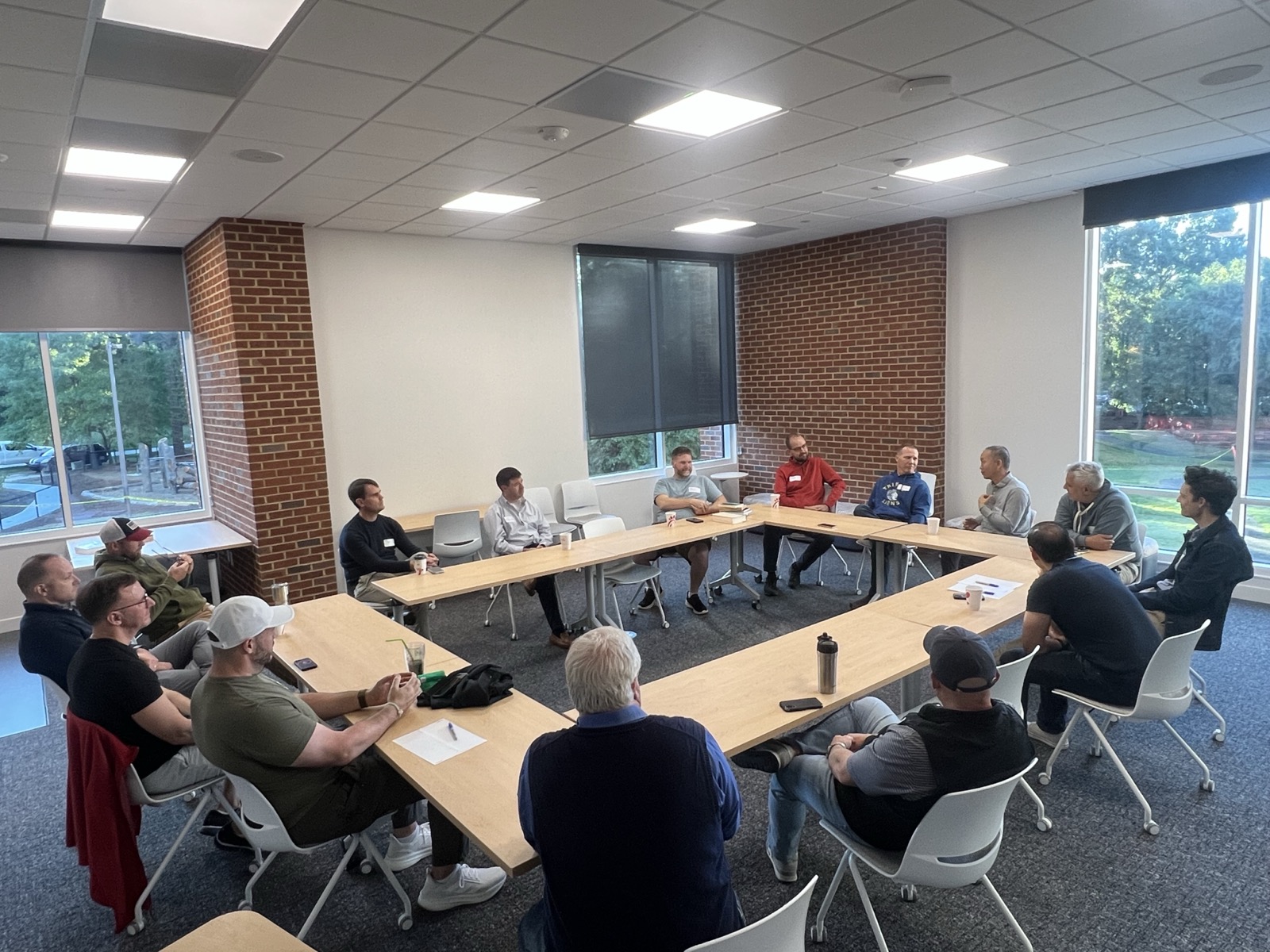
Last week’s question had followed a few of us home. One dad said Trinity talks about giving our kids a rich and unhurried education, and he had started asking himself every morning whether he was living a rich and unhurried life, or whether he was simply too busy to tell.
Another had come at it through Mark 14, which he had just reached while writing out the Gospel by hand in his quiet time: the woman who breaks an alabaster jar of perfume over Jesus’ head while everyone scolds her for the waste, and Jesus telling them to leave her alone, because they will not always have him. Less than a week earlier, this dad said, his daughter had shown him how she had written the number three perfectly, and he glanced at it and went back to work. “I can’t remember what it was I was working on,” he said. “But I still remember not celebrating her perfect three.” Another father had learned secondhand that his son still remembered a playlist he had once made him, one his dad hadn’t seemed to care about. He went back and asked his son to forgive him, and he called the memory a gift, because it gave him the chance.
Into that conversation the dad leading the morning slipped his topic, and admitted afterward he hadn’t planned the segue. “Well, one rich and unhurried thing you can do with your kids is read aloud to them. And that happens to be the topic.”
The Book Does the Work
Reading aloud, he said, slows everything down in a way almost nothing else does anymore. You can’t put it on 1.5x. You can only read as fast as you can talk, and it rarely feels rushed, even when you only have a few minutes. His kids beg for one more chapter after bedtime, and he is a sucker for it. When he told his twelve-year-old it was one of his favorite things to do with them, she corrected him: it’s all of theirs. His eight-year-old saw My Side of the Mountain on the list and gasped and started clapping.
Much of it came from Sarah Mackenzie’s The Read-Aloud Family, and one idea stayed with the room: the book does the work for you. You don’t need a lesson plan. You sit down, let the story carry the weight, and now and then ask a good question. What does this character want, and why can’t they get it? Should she have done that? Which character reminds you most of yourself?
The other idea was stranger and better. Mackenzie argues that when children follow a character through danger or temptation, they are practicing courage alongside him before they have ever needed it, plowing the row in their hearts a little deeper, as he put it, so the next hard moment of their own isn’t entirely unfamiliar. Another father compared it to the way athletes and first responders rehearse in their minds what they haven’t yet done, and to why we sit under the Word preached week after week. He also read us a line Andrew Peterson likes to repeat, though Peterson says himself he doesn’t know who said it first: if you want a child to know the truth, tell them the truth; if you want them to love the truth, tell them a story.
Scripture knew this long before any of us. When Nathan confronted David, he did not start with the charge. He told a story about a rich man and a poor man’s lamb, let David’s own outrage do the work, and only then said, “You are the man” (2 Samuel 12).
A Story You Carry Together
The moment the room kept returning to was a small one. When the presenter’s oldest was six, he had been struggling to grasp the idea that sin was passed down to the whole human race. The next night they read Beauty and the Beast from William Bennett’s The Book of Virtues, and the boy made the connection on his own: it’s like the prince, who did something wrong, and all his servants were turned into objects in the castle. One person did something, and everyone else felt it.
A dad across the table named what made that possible. Had the boy read the story alone, he would have had no one to say it to. Because they had read it together, he could turn to his father and say, it’s like this, and his father could take it deeper. The shared story became a place where the two of them could meet.
That thread ran through much of what others described. One family built reading into a bedtime routine so steady that it helps the kids wind down to sleep, and for a season they all listened to an audiobook while everyone, parents included, colored. A predictable, unhurried ritual with a parent at the end of the day settles a child in a way no instruction to calm down ever will. One mom chose the Ramona books partly because the younger sister is so often misunderstood and in accidental trouble, and her son, without being told, said he was just like her. A father whose first language isn’t English said his daughter complains about his pronunciation, so at breakfast he reads to her in his own language instead, where she has nothing to complain about and they simply enjoy it together.
Dads with struggling readers trade off pages, the child reading one and the father the next, so sounding out the words doesn’t use up everything the child has left for the story.
There was also plenty of talk about management. One dad greeted his boys at the end of last school year with a reading bingo card and a stack of cash each. Another was paid as a teenager to read from a list his parents chose, and thinks minimum wage for finishing a good book is a bargain; a third uses an AI tool to write comprehension questions so his daughter can’t skim. The presenter once offered his oldest fifty dollars to read from a short list and write a page on it. The boy passed over Plato’s Republic for Rich Dad Poor Dad, and his father got back two words he considered worth the money: buy assets.
Nobody suggested any of this cuts against an eight-year-old clapping over My Side of the Mountain, and for a teenager who already reads, maybe it doesn’t. But the love of reading, the thing every one of us most wanted to hand down, kept coming up as something we had been given rather than earned: parents who read to us, a father who tried Moby Dick on a boy a little young for it. We didn’t work out where the incentive ends and the gift begins.
One dad offered a filter he had heard on a podcast that morning: a good book takes you deeper into what is true, and a bad one only distracts you from it. It isn’t far from Philippians 4:8, whatever is true, whatever is noble, whatever is lovely, think about such things. We closed by praying for a steady diet of truth and goodness and beauty, and for the grace to hand it on.
The Books on the Table

These went around the room: The Book of Virtues by William J. Bennett, My Side of the Mountain by Jean Craighead George, A Little Princess by Frances Hodgson Burnett, The Door in the Dragon’s Throat by Frank Peretti, Dangerous Journey, an illustrated retelling of The Pilgrim’s Progress, Little Britches by Ralph Moody, and Trial and Triumph by Richard Hannula. Behind most of the morning was Sarah Mackenzie’s The Read-Aloud Family. And at breakfast, one family swears by The Weighty Word Book: one big word for each letter of the alphabet, each with a short, punning story, which is how one dad’s seven-year-old came to know what bifurcate means.
For This Week
- Read one chapter aloud, somewhere quiet, with your phone in another room. Pick something a little above what they would read on their own; kids can take in far harder books by ear.
- Before you close the book, ask one question: what does this character want, and why can’t they get it? Or, which character reminds you most of yourself?
- If you have a struggling reader, trade pages, and before you start, ask them to tell you what happened last time.
- On one drive this week, put on one story everyone hears together instead of a device each.
- The next time one of your kids brings you something small, a perfect number three or a playlist, stop and celebrate it. If you remember one you missed, go back and say so.